
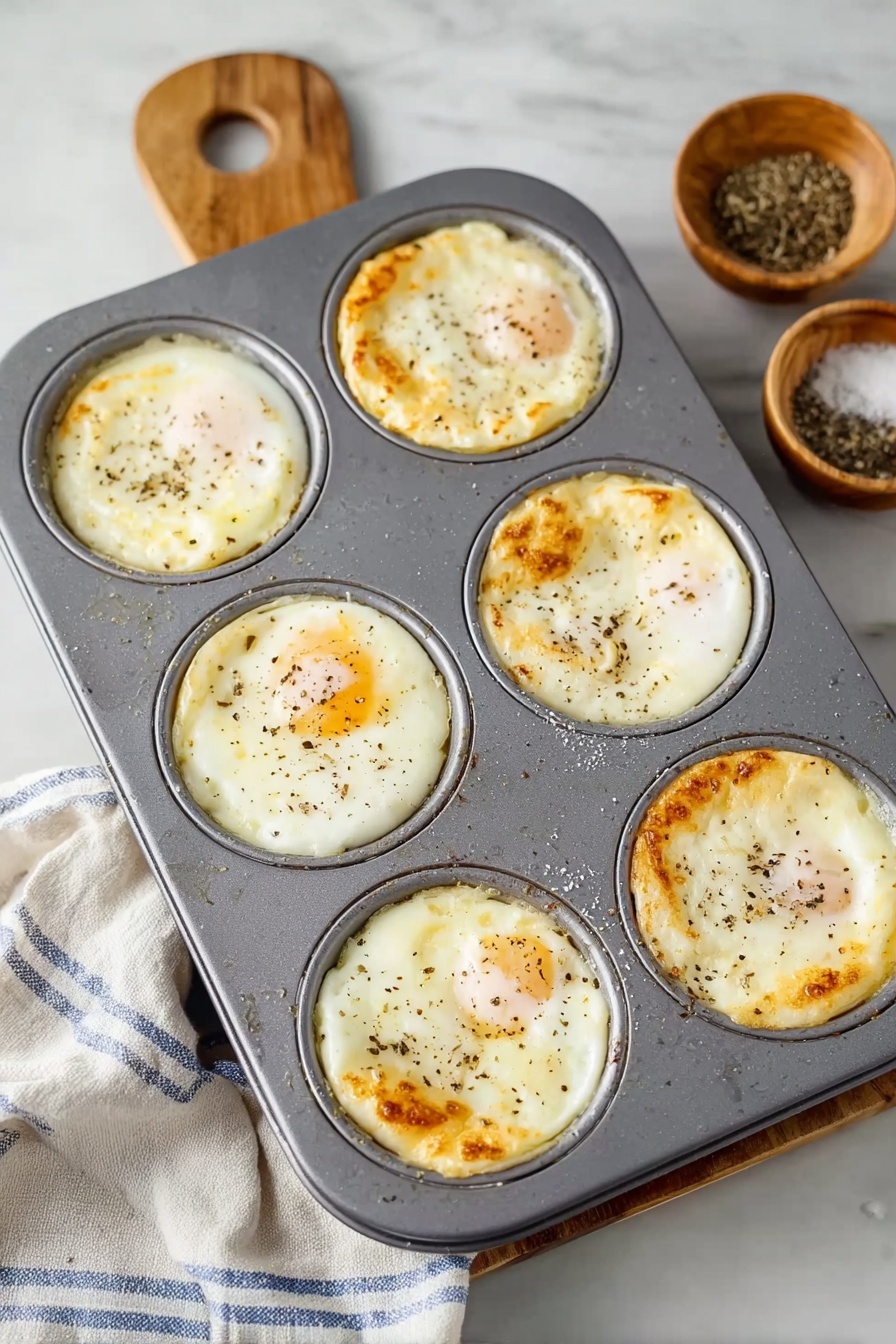
If you’re looking for a simple yet elegant brunch or breakfast idea, I can’t recommend this Baked French Eggs with Parmesan Recipe enough. It’s one of those dishes that feels fancy but is actually super easy to make. When I first tried this recipe, I was blown away by how creamy, cheesy, and perfectly baked the eggs turned out. Trust me, once you make these, you’ll keep coming back for more!
Why You’ll Love This Recipe
- Effortless Elegance: It looks like a dish you’d order at a fancy café but takes just minutes to prep.
- Customizable Comfort: You can tweak herbs, cheese, or add veggies to suit your mood or what’s in your fridge.
- Perfectly Creamy Eggs: The heavy cream and Parmesan create a dreamy texture that’s rich without being heavy.
- Quick Cleanup: Using a muffin tin keeps everything neat and portioned with minimal mess.

Ingredients You’ll Need
The beauty of this Baked French Eggs with Parmesan Recipe lies in its simplicity. The ingredients blend beautifully—creamy, cheesy, salty, with that unmistakable eggy goodness. When shopping, aim for high-quality Parmesan and fresh eggs for the best result.

- Eggs: Fresh, large eggs work great here, but you can adjust baking time if using medium or extra-large sizes.
- Parmesan cheese: Freshly grated Parmesan adds a tangy, nutty flavor and melts beautifully on top.
- Heavy cream: This keeps the eggs silky and rich; you can substitute melted butter if you’re out.
- Salt and black pepper: Simple seasoning to enhance all the flavors.
Variations
I love how versatile this Baked French Eggs with Parmesan Recipe is. Over time, I’ve tried several fun tweaks that make it feel new every time—don’t hesitate to put your own spin on it!
- Adding Protein: My family goes crazy when I line the muffin tins with thin slices of ham or Canadian bacon before cracking the eggs on top.
- Veggie Boost: Sautéed spinach, mushrooms, or bell peppers mix so well with the creamy Parmesan base, and add a welcome pop of color.
- Spice It Up: I sometimes sprinkle crushed red pepper flakes or a dash of hot sauce to give the dish a little kick—perfect if you like a bit of heat in the morning.
- Cheese Alternatives: Gruyere, sharp cheddar, or even creamy goat cheese all melt beautifully and offer different flavor profiles you might enjoy experimenting with.
How to Make Baked French Eggs with Parmesan Recipe
Step 1: Prep Your Muffin Tin and Eggs
First things first: preheat your oven to 425°F. Spritz each cup in a muffin tin with a butter-flavored cooking spray—this is my secret to keeping the eggs from sticking without adding heavy butter. Then, crack an egg into every muffin cup. Make sure you’re gentle to keep the yolks intact; it really does make the dish look prettier and taste better.
Step 2: Add Cream and Seasonings
Next, drizzle about 1 to 2 teaspoons of heavy cream over each egg. I love how this adds extra silkiness as the eggs bake, but if you don’t have cream handy, melted unsalted butter works nicely too. Then season lightly with salt and freshly ground black pepper. Sprinkle a tablespoon of Parmesan cheese on top of each egg—this is where the magic starts happening!
Step 3: Bake to Your Perfect Doneness
Pop the muffin tin into the oven and bake for 7 to 8 minutes if you want soft yolks, 9 to 10 minutes for semi-soft, or 11 to 12 minutes for firm centers. I’ve learned that oven temperatures can vary, so keep an eye on your eggs the first time you try this—we all want that creamy, not rubbery texture! When in doubt, start checking a minute or two earlier than the suggested times.
Step 4: Garnish and Serve Immediately
Once baked, sprinkle a bit more Parmesan cheese on top for that luscious, melty finish. Serve straight out of the oven for the best texture and flavor. I promise you, everyone at the table will be raving about how amazing this feels like a brunch café special made in your own kitchen!
Pro Tips for Making Baked French Eggs with Parmesan Recipe
- Use Fresh Eggs: I always use the freshest eggs I can find for this recipe because they hold their shape better and taste more vibrant.
- Adjust Baking Time: Different ovens vary, and egg sizes affect cooking time—start checking early to nail your preferred doneness.
- Heavy Cream Magic: That little drizzle of cream or melted butter transforms the texture—don’t skip it!
- Avoid Overcrowding: Make sure eggs aren’t too tightly packed in your muffin tin for even cooking and easier removal.
How to Serve Baked French Eggs with Parmesan Recipe

Garnishes
I usually top these baked eggs with fresh chopped chives or a sprinkle of parsley—it adds a bright, fresh note that cuts through the richness perfectly. Sometimes a little fresh thyme works just as well if you’re feeling fancy.
Side Dishes
My go-to sides include crispy crusty bread or toasted baguette slices to scoop up all that creamy goodness. A simple mixed greens salad dressed with lemon vinaigrette makes the meal feel balanced and fresh.
Creative Ways to Present
For a special brunch, I like to serve the eggs in colorful individual ramekins instead of muffin tins—they look so charming on the table and guests love the personal touch. You could even layer sautéed veggies at the bottom of the ramekin for an extra surprise.
Make Ahead and Storage
Storing Leftovers
If you happen to have leftovers—lucky you! I gently transfer the baked eggs into an airtight container and keep them in the fridge for up to 2 days. They’re still delicious but best enjoyed warmed up rather than cold.
Freezing
I haven’t had the best luck freezing these eggs because the texture changes, but if you want to try, freeze them in a single layer in a freezer-safe container, then thaw overnight in the fridge before reheating. Fresh is definitely better here, though.
Reheating
To reheat, I pop leftovers into a 350°F oven for about 5-7 minutes until warmed through. This helps maintain the creamy texture instead of nuking them in the microwave, which can make eggs rubbery.
FAQs
-
Can I make Baked French Eggs with Parmesan Recipe dairy-free?
Yes! You can replace the heavy cream with coconut cream or a dairy-free butter alternative, and swap Parmesan for a dairy-free cheese. The texture will be slightly different but still tasty.
-
How do I know when the eggs are perfectly cooked?
The recipe includes baking times for varying yolk firmness—start checking around those times and judge visually; the whites should be set, and the yolks should look just how you like them (runny, semi-soft, or firm).
-
Can I add vegetables directly in the muffin tin?
Absolutely! Sauté veggies like spinach, mushrooms, or bell peppers and spoon them into the muffin cups before adding the eggs for a delicious veggie twist.
-
Is there a way to make these eggs ahead of time?
You can prep the eggs in the muffin tins up to the point before baking, cover tightly, and refrigerate for a few hours. Bake fresh when you’re ready—it’s great for busy mornings!
Final Thoughts
This Baked French Eggs with Parmesan Recipe has become one of my top go-to dishes when I want something quick but gourmet enough to impress. It’s cozy, creamy, and endlessly adaptable. I encourage you to give it a try—you’ll enjoy the simplicity, the flair, and best of all, the delicious results. Plus, it’s a fantastic recipe to share with friends or family when you want to bring a little French café vibe right into your own kitchen!
Print
Baked French Eggs with Parmesan Recipe
- Prep Time: 5 minutes
- Cook Time: 10 minutes
- Total Time: 15 minutes
- Yield: 12 eggs 1x
- Category: Breakfast
- Method: Baking
- Cuisine: French
- Diet: Vegetarian
Description
Baked French Eggs, also known as Oeufs en Cocotte, are delicate and creamy eggs baked in a muffin tin with Parmesan cheese and heavy cream. This easy and elegant dish can be customized with various seasonings, cheeses, and vegetables for a perfect breakfast or brunch option.
Ingredients
Eggs and Dairy
- 12 large eggs or desired amount
- 8 oz grated or shredded Parmesan cheese
- 1/2 cup heavy cream (more or less depending on how many eggs are being prepared)
- Butter flavored cooking spray for greasing
Seasoning
- Salt to taste
- Black pepper to taste
Instructions
- Preheat Oven: Preheat the oven to 425°F (220°C). Prepare a muffin tin by spritzing each cup with butter flavored cooking spray to prevent sticking.
- Crack the Eggs: Crack an egg into each muffin cup carefully ensuring the yolk remains intact.
- Add Cream and Seasonings: Drizzle 1-2 teaspoons of heavy cream over each egg. Alternatively, a drizzle of melted butter can be used. Season each egg with salt and freshly ground black pepper to your taste.
- Sprinkle Cheese: Sprinkle about 1 tablespoon of grated Parmesan cheese on top of each egg for a rich, savory flavor.
- Bake Eggs: Place the muffin tin in the preheated oven. Bake for 7-8 minutes for soft, runny yolks; 9-10 minutes for semi-soft centers; and 11-12 minutes for fully firm yolks. Adjust baking time based on egg size and desired doneness.
- Garnish and Serve: Once baked, you may garnish with additional Parmesan cheese or fresh herbs like chives, parsley, or thyme. Serve immediately while warm.
Notes
- You can line muffin cups with slices of ham or Canadian bacon for added protein, or use spinach to keep the dish vegetarian.
- Add sautéed vegetables such as zucchini, shallots, garlic, mushrooms, or bell peppers before cracking the egg for extra flavor and texture.
- For a bit of heat, sprinkle crushed red pepper flakes or add dashes of hot sauce. Garlic salt or minced garlic can be mixed into the cream for extra aroma.
- Adjust baking times if using medium or extra-large eggs; smaller eggs cook faster and larger eggs take longer.
- Butter can be substituted for heavy cream, with unsalted butter recommended.
- Other cheese options such as Gruyere, sharp cheddar, Swiss, Asiago, feta, or goat cheese can be used instead of Parmesan for varied flavors.
- Fresh herbs like chives, parsley, or thyme make excellent garnishes to enhance the visual appeal and aromatics.
- Note the baking times carefully and adjust to your oven’s performance to achieve your preferred yolk consistency.
Nutrition
- Serving Size: 1 egg
- Calories: 120 kcal
- Sugar: 0.4 g
- Sodium: 180 mg
- Fat: 9 g
- Saturated Fat: 4 g
- Unsaturated Fat: 4 g
- Trans Fat: 0 g
- Carbohydrates: 1 g
- Fiber: 0 g
- Protein: 8 g
- Cholesterol: 185 mg

Your email address will not be published. Required fields are marked *