
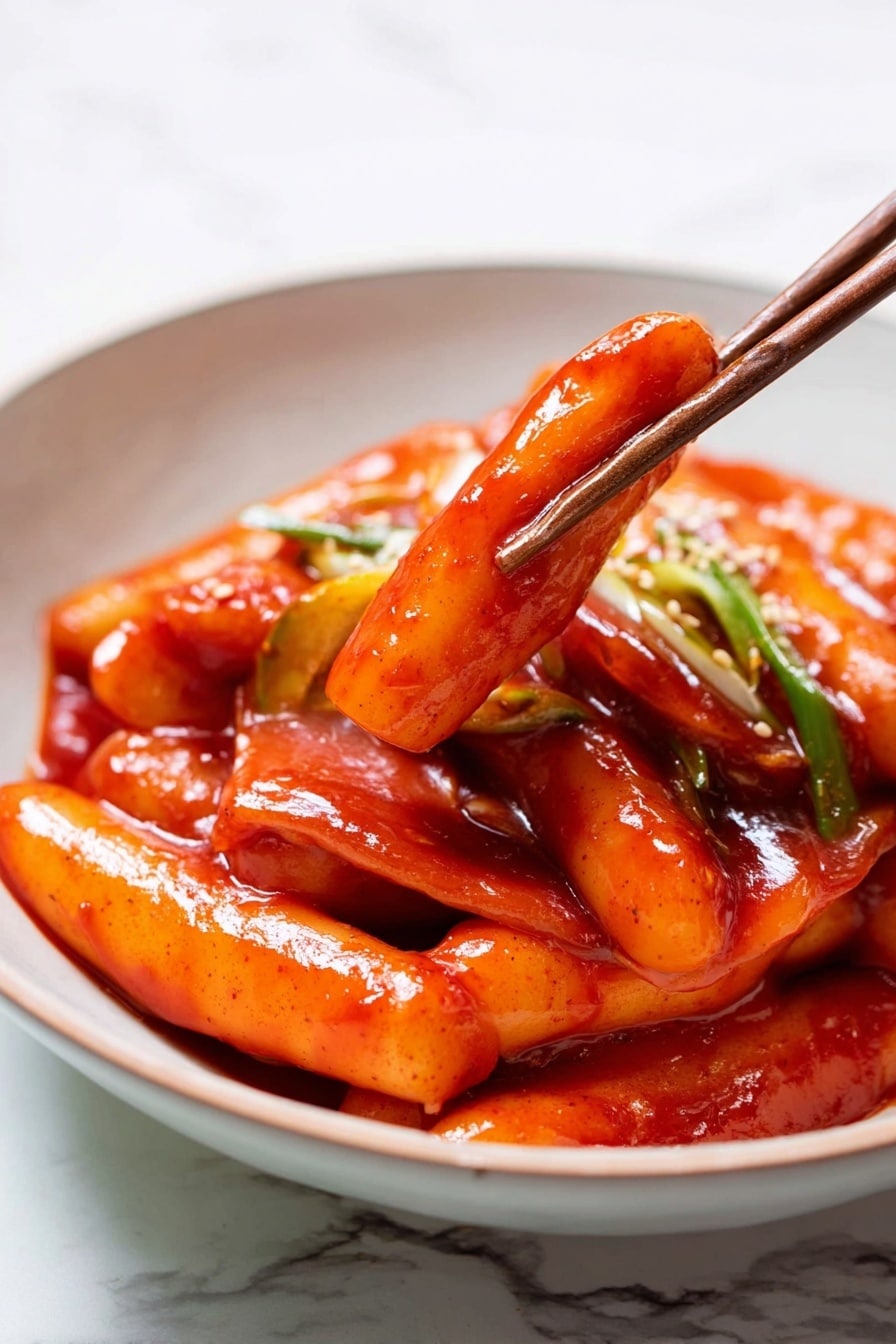
If you’re craving a fiery, flavor-packed Korean street food classic, you’ve got to try my Spicy Tteokbokki Recipe with Rice Cakes Recipe. This dish is all about tender, chewy rice cakes swimming in a rich, spicy, slightly sweet sauce that’s downright addictive. I remember the first time I made this at home—it immediately became a family favorite, perfect for cozy nights or sharing with friends. Keep reading, because I’m going to walk you through everything you need to know to nail it perfectly every time!
Why You’ll Love This Recipe
- Authentic Flavor: Uses homemade anchovy broth and carefully balanced sauce ingredients for a true Korean street food taste.
- Simple Ingredients: Easily available elements like rice cakes, fish cakes, and Korean chili paste come together effortlessly.
- Customizable Heat: Adjust the gochugaru and gochujang amounts to make it as spicy or mild as you like.
- Perfectly Chewy Rice Cakes: Step-by-step instructions ensure your rice cakes are tender without losing their signature chewiness.

Ingredients You’ll Need
The magic of this Spicy Tteokbokki Recipe with Rice Cakes Recipe is really in the balance of ingredients. Each element plays its part to create that sweet-spicy-salty harmony Korean food lovers rave about. I always tell friends to pay attention to their rice cakes and anchovy broth—they’ll make or break the dish!
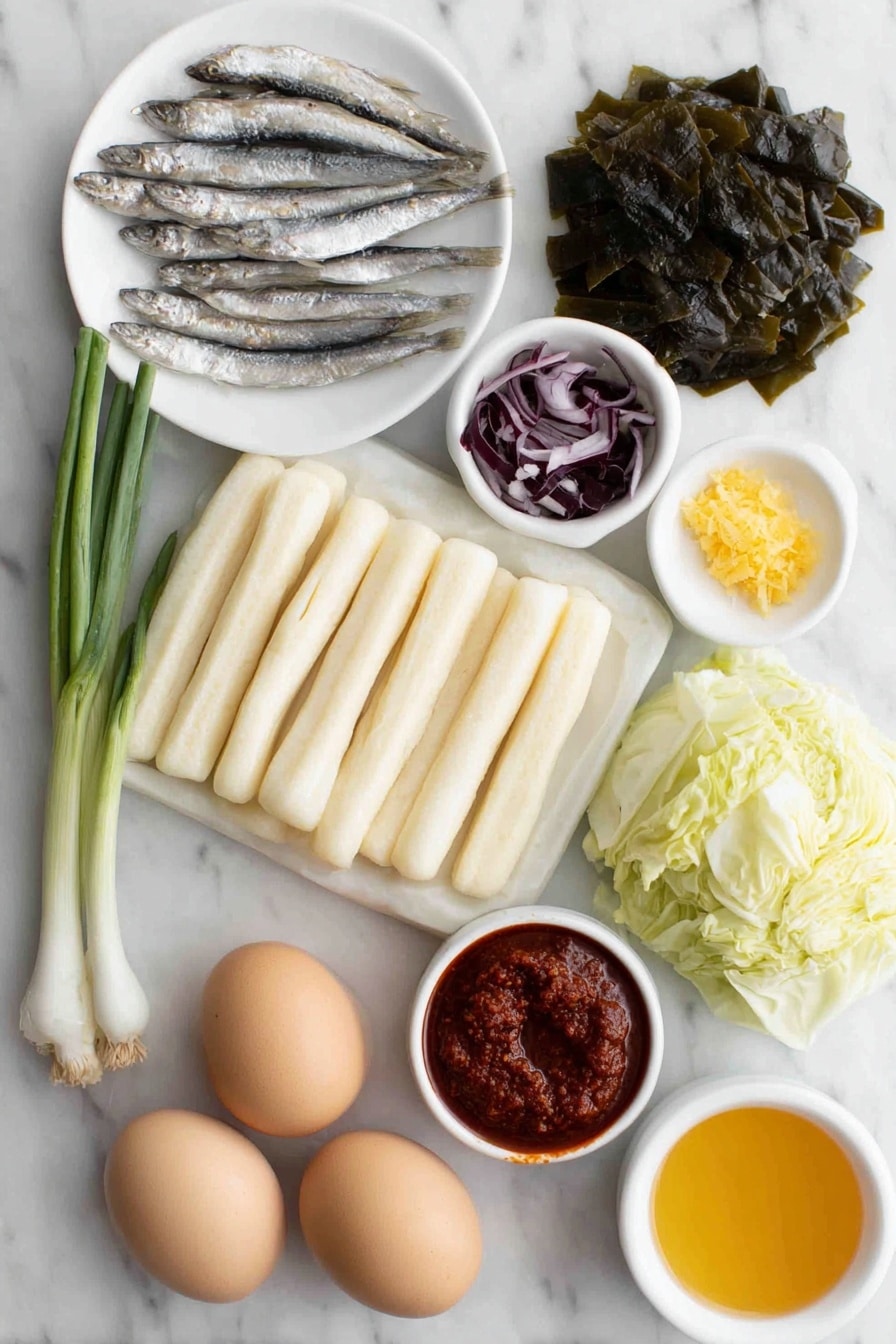
- Tteokbokki Rice Cakes: Look for fresh or refrigerated rice cakes for the best texture; frozen works too but soak them longer.
- Fish Cake (Eomuk): Adds a savory depth and delightful texture—cut into bite-friendly pieces.
- Green Cabbage: For a subtle crunch and sweetness that balances the heat.
- Scallions: Enhance freshness and a subtle oniony bite.
- Minced Garlic: Brings a punch of aroma and flavor.
- Dried Anchovies & Dasima (Dried Kelp): Essential for making a rich, homemade broth that’s way better than storebought.
- Onion: Adds natural sweetness to the broth.
- Gochujang (Korean Chili Paste): The star ingredient that gives that spicy, umami-rich sauce.
- Gochugaru (Korean Chili Powder): Use finely ground for a smoother sauce and adjustable spice.
- Soy Sauce: Salty depth and umami enhancer.
- Sugar & Corn Syrup (or Oligo Syrup): Adds sweetness and a glossy finish to the sauce.
- Boiled Eggs (Optional): My personal favorite way to make the meal heartier and fun to eat.
Variations
I love tweaking this Spicy Tteokbokki Recipe with Rice Cakes Recipe depending on the mood and pantry. Don’t hesitate to make it your own with these fun variations—trust me, it just gets better from there.
- Extra Spice Kick: I sometimes bump up the gochugaru and use freshly ground chili flakes for an eye-wateringly delicious version that my heat-loving friends swoon over.
- Vegetarian Version: Skip the anchovy broth and use vegetable broth instead; add mushrooms for a meaty texture.
- Seafood Tteokbokki: Adding shrimp or squid makes this brighter and adds a lovely briny flavor—perfect for seafood fans.
- Cheese Tteokbokki: Melt shredded mozzarella on top right before serving for a gooey, melty comfort twist that kids and adults equally adore.
How to Make Spicy Tteokbokki Recipe with Rice Cakes Recipe
Step 1: Prep Your Rice Cakes and Vegetables
Start by soaking your rice cakes in warm water for about 20 minutes, especially if they are refrigerated or frozen. This softens them to the perfect chewy texture we all love. While they soak, slice your fish cake, green cabbage, and scallions into roughly 2-inch pieces so they’re ready to go.
Step 2: Make a Flavorful Anchovy Broth
Grab a large pan and add your dried anchovies, dried kelp (dasima), and sliced onion with about 5 cups of water. Bring this to a boil over medium-high heat, then lower to medium and let it simmer for 10 minutes. This homemade broth is where the magic begins. After simmering, strain out the solids—you want just that rich, savory liquid to build your sauce on.
Step 3: Build Your Spicy Sauce
Once your broth is ready, stir in the gochujang, gochugaru, soy sauce, sugar, and corn syrup directly into the pan. Stir until the red chili paste dissolves fully and the sauce looks bright and glossy—this is the flavor foundation your rice cakes will soak up beautifully.
Step 4: Cook the Rice Cakes Until Tender
Add in your soaked rice cakes and bring everything back to a boil. Now, this is the part where attention matters—you’ll want to stir frequently so nothing sticks or burns on the bottom. Depending on your rice cakes, it might take 8 to 10 minutes for them to get wonderfully soft and for the sauce to thicken up nicely.
Step 5: Toss in Vegetables and Fish Cakes
Once the rice cakes have softened, add your sliced cabbage, fish cakes, and minced garlic to the sauce. Keep cooking and stirring occasionally for another 4 to 6 minutes, so the veggies soften just right and the sauce deepens in flavor. If it gets too thick, add a splash more broth or water.
Step 6: Final Touches and Serve
With 2 to 3 minutes left, toss in your scallions and boiled eggs if you’re using them. Give everything a final stir, taste for seasoning, and adjust with a pinch more sugar or soy sauce if needed. Serve this spicy, chewy dish hot and get ready for some serious compliments!
Pro Tips for Making Spicy Tteokbokki Recipe with Rice Cakes Recipe
- Soak Your Rice Cakes Well: Don’t skip the soaking step! It ensures your rice cakes soften evenly without turning mushy.
- Make Your Own Broth: That anchovy-kelp broth adds an umami depth that storebought doesn’t match—I’ve tried both, and homemade wins every time.
- Stir Often: Keep the sauce from sticking or burning by stirring frequently, especially once the rice cakes start softening.
- Adjust Sweetness Last: Taste late in the cooking process; sometimes the sauce needs a little extra sugar to balance the heat perfectly.
How to Serve Spicy Tteokbokki Recipe with Rice Cakes Recipe
Garnishes
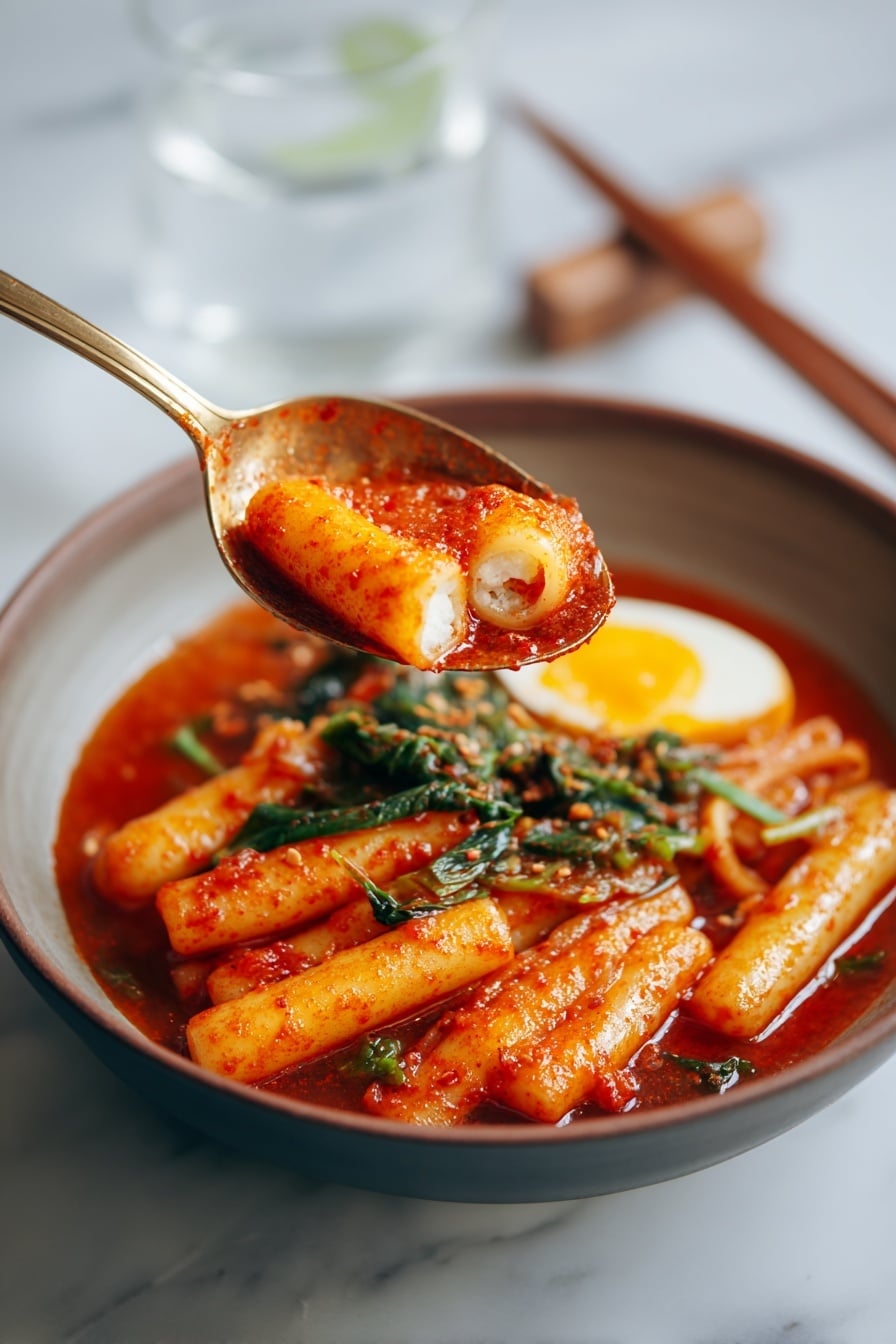
I always finish this dish with a sprinkle of toasted sesame seeds and a handful of sliced scallions. It adds fresh crunch and a nutty aroma. Sometimes, I scatter some thinly shredded seaweed for an extra touch of umami and texture—totally optional but it amps up presentation.
Side Dishes
Spicy Tteokbokki pairs wonderfully with simple Korean sides like kimchi, pickled radishes, or a light cucumber salad. I also love serving it alongside steamed rice or a mild egg roll to balance the spice.
Creative Ways to Present
For parties, I’ve set up a tteokbokki “station” with various add-ins like boiled eggs, cheese, and extra veggies for guests to customize their bowls. It’s a fun, interactive way to enjoy the dish and always sparks lively conversation.
Make Ahead and Storage
Storing Leftovers
I usually store leftover tteokbokki in an airtight container in the fridge for up to 2 days. The sauce thickens quite a bit overnight, so you’ll want to loosen it up when reheating. Leftovers taste great, just not quite the same the next day.
Freezing
I’ve tried freezing tteokbokki, but the texture of the rice cakes changes and tends to get a bit gummy. If you want to freeze, separate the sauce from the rice cakes to maintain better texture and combine after thawing.
Reheating
To reheat, I highly recommend warming the tteokbokki gently in a pan with a splash of water or broth over low heat. This way, you can revive that perfect chewy texture and keep the sauce from drying out—microwaving tends to make it rubbery and unappealing.
FAQs
-
What if I can’t find fresh tteokbokki rice cakes?
Don’t worry! Refrigerated or even frozen rice cakes work just fine—in fact, soaking them a bit longer in warm water helps soften them up. Just avoid super old or dried rice cakes as they can be tough to rehydrate properly.
-
Can I make this recipe less spicy?
Absolutely! You can reduce the amount of gochugaru and gochujang, or choose milder chili pastes. Also, adding a bit more sugar or corn syrup helps balance the heat nicely.
-
Is there a vegetarian version of this Spicy Tteokbokki Recipe with Rice Cakes Recipe?
Yes! Simply swap the anchovy broth for vegetable broth and omit the fish cake, or replace it with tofu or mushrooms. The sauce remains flavorful and just as satisfying.
-
How do I prevent the rice cakes from sticking to the pan?
Frequent stirring is key here. Also, make sure there’s enough liquid in the pan during cooking—if the sauce thickens too fast, add a splash of broth or water to loosen it and prevent sticking.
Final Thoughts
I absolutely love how this Spicy Tteokbokki Recipe with Rice Cakes Recipe brings a taste of Korean street food into my home kitchen with minimal fuss. It’s hearty, comforting, and packed with layers of flavor that keep you coming back for more. Whether you’re cooking it for family, friends, or just treating yourself, this recipe hits all the right notes and is surprisingly easy to make. Give it a try—you’ll be amazed at how quickly these chewy, spicy rice cakes become your new go-to comfort food!
Print
Spicy Tteokbokki Recipe with Rice Cakes Recipe
- Prep Time: 20 minutes
- Cook Time: 20 minutes
- Total Time: 40 minutes
- Yield: 3 servings 1x
- Category: Main Dish
- Method: Stovetop
- Cuisine: Korean
Description
Tteokbokki is a popular Korean street food featuring chewy rice cakes stir-fried in a spicy and slightly sweet gochujang-based sauce. This recipe includes fish cakes, cabbage, scallions, and a flavorful anchovy broth that enhances the depth of the dish. Perfect for a comforting snack or meal, it offers a satisfying balance of soft textures and bold flavors.
Ingredients
Main Ingredients
- 1 pound tteokbokki tteok 떡볶이 떡 (about 24 3-inch long rice cake pieces)
- 1–2 eomuk 어묵 (fish cake) sheets
- 4 ounces green cabbage (yangbaechu, 양배추)
- 1–2 scallions
- 1 tablespoon minced garlic
Broth Ingredients
- 8–10 medium to large dried anchovies (마른멸치), about 0.5 ounces (15 grams)
- 1 piece dasima (dried kelp), about 3-inch square
- 1/4 medium onion, roughly sliced
- 5 cups water
Tteokbokki Sauce
- 3 cups anchovy broth or water (use 4 cups for more sauce)
- 3 tablespoons gochujang, 고추장
- 1–3 teaspoons gochugaru, 고추가루 (finely ground)
- 1 tablespoon soy sauce
- 2 tablespoons sugar (use 1 tablespoon for less sweet)
- 1 tablespoon corn syrup (or oligo syrup) – increase sugar if not using
Optional
- 2 boiled eggs
Instructions
- Soak Rice Cakes: Soak the tteokbokki rice cakes in water for about 20 minutes to soften them, especially if they are refrigerated or slightly hardened.
- Prepare Vegetables and Fish Cake: Cut the fish cake, cabbage, and scallions into approximately 2-inch long pieces. Mince the garlic.
- Make Anchovy Broth: In a large pan, combine dried anchovies, dried kelp (dasima), and roughly sliced onion with 5 cups of water. Bring to a boil over medium-high heat and let it boil for about 10 minutes. Adjust heat to medium if boiling too vigorously. Then remove anchovies, kelp, and onion from the broth, leaving a flavorful stock.
- Add Sauce Ingredients: To the broth in the pan, add gochujang, gochugaru, soy sauce, sugar, and corn syrup. Stir well to dissolve the chili paste completely into the broth, creating the tteokbokki sauce.
- Add Rice Cakes and Simmer: Introduce the soaked rice cakes into the sauce. Boil them, stirring frequently to prevent sticking, until the rice cakes become very soft and the sauce thickens, about 8 to 10 minutes. This timing may vary depending on the rice cakes’ freshness.
- Add Vegetables and Fish Cakes: Add the cut cabbage, minced garlic, and fish cakes to the pan. Continue boiling and stir occasionally for another 4 to 6 minutes. Add more broth or water if needed to maintain a saucy consistency.
- Finish with Scallions and Eggs: Add the scallions and optional boiled eggs during the last 2 to 3 minutes of cooking. Taste the sauce and adjust seasoning if necessary.
- Serve Hot: Serve the tteokbokki hot for the best flavor and texture. Enjoy immediately.
Notes
- You can find tteokbokki rice cakes fresh, refrigerated, or frozen at Korean markets. Fresh local rice cakes are best; otherwise, use refrigerated or frozen ones in that order.
- For a different sauce variation, try 2 tablespoons gochujang, 2 tablespoons finely ground gochugaru, and 1.5 tablespoons soy sauce for a cleaner, spicier flavor.
- Finely ground gochugaru blends better into the sauce. You can grind regular gochugaru in a spice grinder or sift it through a sieve.
- Tteokbokki reheats poorly in the microwave. Reheat leftovers with some broth or water in a pan over low heat for better results.
Nutrition
- Serving Size: 1 cup
- Calories: 320
- Sugar: 12 g
- Sodium: 800 mg
- Fat: 4 g
- Saturated Fat: 1 g
- Unsaturated Fat: 3 g
- Trans Fat: 0 g
- Carbohydrates: 60 g
- Fiber: 2 g
- Protein: 6 g
- Cholesterol: 15 mg

Your email address will not be published. Required fields are marked *